
Sagging Facial Skin

- Treatment tailored to the depth and location of facial sagging
- Preservation-led techniques for natural facial proportions
- All consultations free with no obligation
- Internationally trained specialist surgeons
- Complete aftercare included
A Personalised Approach to Sagging Facial Skin
Sagging facial skin develops as the skin loses elasticity and the deeper tissues supporting the cheeks, jawline and brows gradually descend. These changes can soften facial contours, deepen existing folds and create a heavier appearance that does not always reflect how rested or energetic someone feels.
At Ullas Facial Plastic Surgery, we assess the face as a connected structure rather than focusing only on the most visible area of loose skin. Treatment is selected according to the depth and location of the sagging, as well as the individual’s skin quality, facial structure and preferred degree of change.
About
What Is Sagging Facial Skin?
Sagging facial skin refers to a loss of firmness and support that allows the skin and underlying soft tissues to move from their previous position. It can affect the brows, cheeks, jawline and the transition between the lower face and neck, with reduced collagen, changes in facial fat and weakening of deeper support structures all contributing to its appearance.
This content has been medically reviewed by Mr Gautham Ullas BMBS, BMedSci, FRCS (ORL-HNS).
What Causes Sagging Facial Skin?
Facial tissues change naturally over time as the skin produces less collagen and elastin and the deeper structures gradually lose support. The rate and pattern of sagging differ between individuals, with genetics, facial anatomy, skin quality and cumulative environmental damage all influencing when these changes become noticeable.
Factors contributing to sagging facial skin include:
- Reduced collagen and elastin
- Descent of facial fat and soft tissue
- Changes in facial bone support
- Repeated sun exposure
- Smoking
- Significant or rapid weight loss
- Genetics
- Natural ageing
Clinicians broadly distinguish between weakness arising above the facial nerve nucleus (known as an upper motor neurone pattern, typically associated with stroke and other central causes, and which usually spares the forehead) and weakness arising below it (a lower motor neurone pattern, as seen in Bell’s palsy and Ramsay Hunt syndrome, which typically affects the whole side of the face including the forehead). This distinction is central to why sudden facial weakness needs urgent assessment, see the notice above.
Assessment
How We Assess Sagging Facial Skin at Ullas Facial Plastic Surgery
Assessment considers the degree and location of the sagging, skin elasticity, facial volume and the position of deeper tissues across the brows, cheeks, lower face, jawline and neck. We also review your medical history, previous facial treatments, general health and preferred degree of change before recommending a suitable treatment plan.
Treatment Options
Sagging Facial Skin Treatment Options at Ullas Facial Plastic Surgery

Sagging facial skin treatment should match both the depth of the concern and the area affected. Mild surface laxity can respond to laser resurfacing, while more established tissue descent requires a lifting procedure chosen based on the extent and location of the sagging.
CO2 Laser for Mild to Moderate Facial Skin Laxity
CO2 laser resurfacing creates controlled areas of injury within the skin, stimulating collagen production as the treated tissue heals. It improves firmness, texture and fine wrinkling in skin with mild to moderate laxity, but it does not reposition significantly descended cheeks or lower-face tissues.
MACS Facelift for Early to Moderate Lower-Face Sagging
A MACS facelift lifts and supports deeper tissues through a shorter-incision approach. It is suited to selected patients with early to moderate lower-face sagging, initial jowl formation and reduced jawline definition who do not require the more extensive repositioning of a deep plane facelift.
Preservation Deep Plane Facelift for More Advanced Tissue Descent
A preservation deep plane facelift releases and repositions the deeper supporting layers of the face as a connected unit. It addresses more established descent through the cheeks and lower face, improving midface support, deeper facial folds and jawline definition without relying on excessive tension across the skin.
Midface and Brow Lift for Upper-Face and Cheek Sagging
A midface and brow lift restores the position of descended tissues across the cheeks, brows and forehead. It is considered for sagging that creates flattened cheeks, heavy brows, reduced upper-eyelid visibility or a tired appearance through the upper and middle face.
Deep Plane Neck Lift When Sagging Extends Below the Jawline
Facial sagging can continue across the jawline into the neck rather than stopping at a clear boundary. A preservation deep plane neck lift addresses deeper neck tissues, muscle laxity and loss of jawline definition, either as a standalone procedure or alongside facial lifting when both regions require treatment.
Your journey
What to Expect From Your Sagging Facial Skin Treatment
Your experience and recovery will depend on whether your treatment involves laser resurfacing, a regional lift or more extensive facial rejuvenation. We provide clear guidance at every stage so that you understand the proposed procedure and its limitations.
Your free consultation takes place directly with a facial plastic surgeon. We assess your skin, facial structure and pattern of tissue descent, discuss what you want to change and explain which treatment offers the most appropriate degree of correction. A second complimentary consultation gives you time to consider the recommendation without pressure.
Treatment is planned around your anatomy and may involve CO2 laser resurfacing, a MACS facelift, a preservation deep plane facelift or a procedure targeting the brow, midface or neck. The surgeon will explain the anaesthetic, treatment stages, expected duration and preparation required for the selected approach.
Recovery ranges from a period of redness and surface healing after CO2 laser treatment to several weeks of swelling following a facial lifting procedure. You will receive procedure-specific aftercare instructions and scheduled follow-up appointments to monitor healing.
CO2 laser results develop as collagen remodels over the following weeks and months. Facial lifting results become clearer as swelling settles and repositioned tissues soften into their new position, producing improved support and definition while preserving natural facial expression.
cost
How Much Does Sagging Facial Skin Treatment Cost?
The cost of sagging facial skin treatment depends on the type of treatment recommended. Following consultation, you will receive a clear quotation tailored to your specific treatment plan.

Flexible Options
Spread the cost with manageable monthly payments

Terms Available
Various payment terms to suit your circumstances

Regulated Provider
Finance provided through Pall Mall Medical
Our dedicated patient coordinator will discuss all available finance options during your consultation, helping you find a plan that works for your budget.
Explore Your Sagging Facial Skin Treatment Options
Reclaim your self-assurance
Choose Us
Why Choose Ullas Facial Plastic Surgery for Your Sagging Facial Skin Treatment?
Treating facial sagging requires an understanding of the skin and the deeper structures that shape the face. Our practice is dedicated to facial plastic and reconstructive procedures, allowing treatment to be planned according to the individual anatomy rather than applying the same approach to every patient.
Our approach includes:

Assessment directly with a facial plastic surgeon

Surgical and laser-based treatment options

Preservation-led facial rejuvenation techniques

Treatment plans designed around natural facial proportions

Free first and second consultations

Honest guidance about achievable results

A named point of contact throughout treatment

Complimentary follow-up and aftercare
Our Doctors
Meet Your Facial Plastic Surgeons
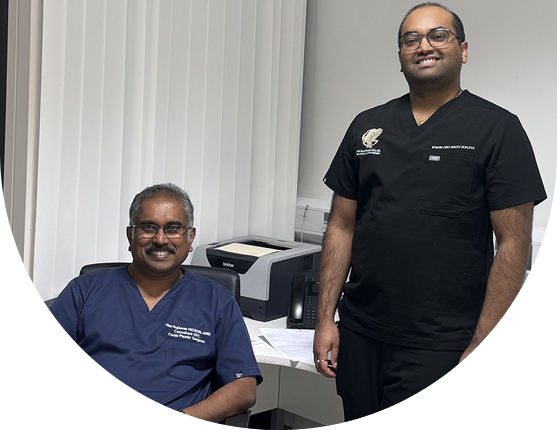
Two specialist facial plastic surgeons lead your care at Ullas Facial Plastic Surgery with extensive training in both aesthetic and reconstructive facial surgery.
Professor Ullas Raghavan is an internationally recognised facial plastic and reconstructive surgeon with decades of experience in complex facial surgery, including preservation deep plane facelift and neck lift techniques.
Mr Gautham Ullas is a UK-trained facial plastic surgeon with specialist expertise in facial rejuvenation, revision rhinoplasty and facial nerve reconstruction, offering a thoughtful and modern approach to facial surgery.
Book a Sagging Facial Skin Consultation
Book a free consultation at Ullas Facial Plastic Surgery to discuss sagging facial skin and the treatments best suited to your skin quality, degree of facial laxity, and underlying anatomy. We welcome patients from Manchester, throughout the UK and overseas.
If you would like to arrange a consultation, you can reach the team by:
FAQ
Sagging Facial Skin FAQs
How do I tighten saggy skin on my face?
The right approach depends on whether the concern involves mild skin laxity or deeper tissue descent. CO2 laser improves surface firmness, while facial lifting procedures reposition sagging tissues and restore structural support.
Can sagging facial skin be reversed?
Treatment can reposition descended tissues or improve mild skin laxity, although it cannot stop the natural ageing process. The degree of correction depends on your anatomy, skin quality and the procedure selected.
At what age does facial skin start to sag?
There is no specific age at which facial sagging begins. Genetics, sun exposure, smoking, weight changes and skin quality influence when it becomes visible.
Is sagging facial skin a normal part of ageing?
Yes, facial skin and deeper supporting tissues change naturally with age. Treatment is a personal choice and is considered when these changes begin to affect how someone feels about their appearance.
What causes sagging skin on the face?
Sagging develops through a combination of reduced skin elasticity, changes in facial fat, declining structural support and the effects of gravity. Sun exposure, smoking, genetics and substantial weight loss can make these changes more noticeable.
Can sagging facial skin be prevented?
Facial ageing cannot be prevented completely, but protecting the skin from ultraviolet exposure and avoiding smoking reduce avoidable collagen damage. Maintaining a stable weight also limits repeated stretching and contraction of the facial tissues.
How can sagging facial skin be treated?
Options include CO2 laser resurfacing, MACS facelift, preservation deep plane facelift, midface and brow lifting, and deep plane neck lifting. The correct option depends on the affected region and whether the concern is within the skin or the deeper facial tissues.
Is treatment for sagging facial skin safe?
Every procedure carries potential risks, which differ between laser treatment and facial surgery. Your surgeon will explain the relevant risks, expected side effects and recovery requirements before treatment is agreed.
How long do sagging facial skin treatment results last?
CO2 laser produces progressive improvements in skin quality, while surgical lifting provides longer-term structural correction. Longevity varies with the procedure, skin quality, lifestyle and the continuing ageing process.
When should I see a surgeon about sagging facial skin?
You can arrange an assessment when facial sagging begins to concern you, and you want a clear explanation of the available options. A consultation does not commit you to treatment and can establish whether a procedure is appropriate.