
Rhinoplasty

- Personalised nasal reshaping
- Functional and aesthetic expertise
- All consultations free with no obligation
- Internationally trained specialist surgeons
- Complete aftercare included
A Personalised Approach to Natural-Looking Rhinoplasty
Midface lifting is surgery that restores the position and fullness of the middle third of the face: the cheeks, the area over the cheekbone, and the soft tissue that sits directly beneath the lower eyelids. When these deeper tissues descend, the cheek flattens, the distance between the lower lid and the cheek appears to lengthen, and the face can look drawn or tired even when nothing else has changed.
At Ullas Facial Plastic Surgery, midface lift surgery is planned around each patient’s bone structure, lower eyelid position, cheek volume and skin quality. The aim is to lift the midface back to where it used to sit, in a way that stays proportionate to the rest of the face, without the overfilled or pulled appearance that can follow volume-only or skin-only approaches.
About
What is Rhinoplasty?
Rhinoplasty is a surgical procedure that alters the bone and cartilage of the nose to change its shape, size or proportion. It can also improve breathing function where structural issues are contributing to nasal obstruction, addressing the tip, bridge, nostrils or overall nasal profile, depending on individual anatomy and the outcome a patient is looking for.
Revision rhinoplasty follows the same principles but is performed on a nose that has already been operated on, often where scar tissue, altered anatomy or previous complications make the surgery more complex. This is an area of particular focus at Ullas Facial Plastic Surgery, including complex cases such as septal perforation repair.
This content has been medically reviewed by Mr Gautham Ullas BMBS, BMedSci, FRCS (ORL-HNS).
What Concerns Can Rhinoplasty Address?
Patients seek rhinoplasty for a wide range of reasons, from long-standing concerns about nasal shape to changes caused by injury or previous surgery. The procedure can be planned to address a single feature or several concerns together, depending on individual anatomy.
Rhinoplasty can address:
- A dorsal hump or uneven bridge
- A bulbous, drooping or poorly defined tip
- Asymmetry between the two sides of the nose
- Breathing difficulties linked to nasal structure
- Results from a previous rhinoplasty that did not meet expectations
- Septal perforation and other structural nasal problems
Benefits
What are the Benefits of Rhinoplasty?
The nose has such an influence on overall facial balance that even measured changes in shape can noticeably improve how proportionate the face appears as a whole. For patients with functional concerns, rhinoplasty can also bring a genuine improvement in day-to-day breathing.
The benefits of rhinoplasty include:

Improved nasal shape and proportion

Better balance between the nose and the surrounding facial features

Correction of asymmetry or previous surgical irregularities

Improved nasal airflow where structural obstruction is present

Long-lasting structural change

Increased confidence in facial photographs and profile
our Candidates
Am I a Good Candidate for Rhinoplasty?

Patients considering rhinoplasty are often unhappy with a specific feature of their nose, such as its size, shape or symmetry, or are seeking correction after a previous procedure did not achieve the result they hoped for. Suitability depends on nasal anatomy, skin quality and overall facial proportions, all assessed individually during consultation, alongside any functional breathing concerns that may also need addressing.
Rhinoplasty Surgery at a Glance
Duration of Surgery
2-3 Hours
Anaesthesia
General
Hospital Stay
Day Case / 1 Night
Pre-admission
No smoking/vaping x 6 weeks Off HRT/OCP x 6 weeks
Downtime
2 Weeks
Driving
7–10 Days
Time to Exercise
6 Weeks
Follow-Up
1 week / 2 weeks / 6 weeks / 6 months / 1 year
How Does Rhinoplasty Work?
Rhinoplasty reshapes the underlying bone and cartilage of the nose, either through an open approach with a small incision across the columella (in between the nostrils) or a closed approach using incisions hidden inside the nostrils. The choice of technique depends on the complexity of the case, with more involved revision surgery often requiring an open approach for greater visibility and control.
Comparison of Open and Closed Rhinoplasty Surgical Approaches
| Criterion | Open Rhinoplasty | Closed Rhinoplasty |
|---|---|---|
| Incision placement | Small trans-columellar incision across the narrow strip between nostrils, combined with internal marginal incisions | All incisions placed strictly endonasally (inside the nostrils) with no external cuts |
| Visible scarring | Fine trans-columellar scar, which typically fades to a faint line over time | No visible external scarring; all incision lines remain entirely hidden inside the nasal cavity |
| Surgical exposure & control | Direct, binocular visualization and direct access to underlying cartilaginous and bony frameworks | Tactile and limited endonasal visual access through narrow surgical corridors |
| Typical suitability | Complex structural reshaping, major tip refinement, asymmetrical corrections, and revision procedures | Minor dorsal hump reduction, straightforward structural tweaks, or minor symmetry adjustments |
| Swelling & recovery timeline | Post-operative tip swelling tends to persist longer due to trans-columellar lymphatic disruption | Slightly reduced immediate post-operative swelling and marginal initial recovery speed |
For patients with a functional component, structural work to the septum or internal nasal valve can be carried out during the same procedure. Every surgical plan reflects the specific combination of aesthetic and functional goals discussed at consultation.
Your journey
Your Rhinoplasty Treatment Journey at Ullas Facial Plastic Surgery
Every rhinoplasty at Ullas Facial Plastic Surgery is planned around individual nasal anatomy and goals, whether the procedure is primary or revision surgery. The treatment journey is designed to give clarity and confidence at each stage.
Your consultation is free and carried out directly with a facial plastic surgeon, including a detailed assessment of your nasal anatomy and, where relevant, imaging or morphing software to help visualise potential outcomes. A second complimentary consultation is also offered so you can reflect and ask further questions before deciding to proceed.
Rhinoplasty is typically performed under general anaesthesia. Depending on the surgical plan, incisions are placed within the nostrils or across the columella, allowing the surgeon to reshape the underlying structure before the nose is carefully redraped and supported while it heals.
Initial swelling means the final shape of the nose is not immediately visible, though the overall change becomes noticeably clearer over the first few months. Subtle refinement continues for up to a year as deeper swelling resolves and the tissues settle into their final position.
A splint is worn for approximately one week to support the new nasal structure, with most visible bruising and swelling settling within two to three weeks. Most patients return to work within one to two weeks, while strenuous exercise and contact sports are avoided for a longer period while healing continues.
Risks
Possible Risks or Side Effects of Rhinoplasty
As with any nasal surgery, rhinoplasty involves a period of normal healing alongside a small number of less common risks, particularly in complex revision cases, and your surgeon will explain both fully at consultation. Most patients experience some of the temporary side effects below, while the risks further down the list are uncommon.
These can include:
- Swelling and bruising around the nose and eyes
- Temporary numbness across the tip and bridge
- Temporary breathing changes while swelling settles
- Scarring, which is minimal and often well concealed
- Infection or delayed healing, which is uncommon
- Rare need for revision surgery to refine the result
Feeling disconnected from your reflection? Frustrated by limited options for facial concerns others dismiss? Our dual-trained surgeons specialise in preservation deep plane facelifts and facial nerve reconstruction, delivering the natural-looking results you deserve. Experience renewed confidence as your appearance finally matches how you feel inside, with minimal downtime and compassionate expert care throughout your journey.
cost
How Much Does Rhinoplasty Cost?
The cost of rhinoplasty depends on whether the procedure is a primary or revision case, and the degree of structural or functional work involved. Following consultation, you will receive a clear quotation tailored to your treatment plan.

Flexible Options
Spread the cost with manageable monthly payments

Terms Available
Various payment terms to suit your circumstances

Regulated Provider
Finance provided through Pall Mall Medical
Our dedicated patient coordinator will discuss all available finance options during your consultation, helping you find a plan that works for your budget.
Choose Us
Why Choose Us for Your Rhinoplasty Treatment?
Rhinoplasty results depend heavily on how carefully the underlying nasal structure is assessed before surgery, since even subtle anatomical differences change what technique will work best. At Ullas Facial Plastic Surgery, this is treated as a defining part of the process rather than a formality before booking a date.
People choose Ullas Facial Plastic Surgery for their rhinoplasty because:

Specialist experience in complex and revision rhinoplasty

A particular focus on septal perforation repair

Consultations that include a clear discussion of what result to expect

Honest advice on what surgery can and cannot achieve

Surgical planning built around your individual anatomy

Free first and second consultations, with no pressure to proceed
Our Doctors
Meet Your Facial Plastic Surgeons
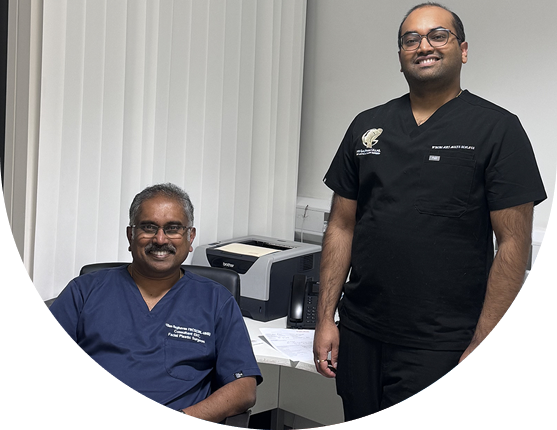
Two specialist facial plastic surgeons lead your care at Ullas Facial Plastic Surgery with extensive training in both aesthetic and reconstructive facial surgery.
Professor Ullas Raghavan is an internationally recognised facial plastic and reconstructive surgeon with decades of experience in complex facial surgery, including preservation deep plane face and neck lift techniques.
Mr Gautham Ullas is a UK-trained facial plastic surgeon with specialist expertise in facial rejuvenation, revision rhinoplasty and facial nerve reconstruction, offering a thoughtful and modern approach to facial surgery.
How to Book a Consultation
Consultations at Ullas Facial Plastic Surgery are free and without obligation. Patients from across the UK and overseas are welcome to arrange an appointment to discuss treatment options in a calm, professional setting.
To book a consultation or speak with the team:
FAQ
Rhinoplasty FAQs
Can rhinoplasty improve breathing as well as appearance?
Yes, structural work to the septum or internal nasal valve can be carried out alongside cosmetic reshaping where breathing difficulties are contributing to nasal obstruction. This is assessed during consultation alongside your aesthetic goals.
Is revision rhinoplasty more complicated than primary rhinoplasty?
Yes, revision rhinoplasty is generally more complex, since previous surgery can leave scar tissue, altered structure or reduced cartilage available for reshaping. This is an area of particular expertise at Ullas Facial Plastic Surgery, including cases referred from other surgeons.
How many rhinoplasty procedures can be performed on the same nose?
There is no fixed limit, though each additional procedure becomes more complex as available cartilage and healthy tissue are reduced. Your surgeon will discuss what is realistically achievable if you are considering a further revision.
What is septal perforation and can it be repaired during rhinoplasty?
Septal perforation is a hole in the cartilage or bone dividing the two nostrils, which can affect breathing and cause other symptoms. Repair is a specialist area of expertise at Ullas Facial Plastic Surgery and is usually combined with rhinoplasty, depending on the individual case.
Can I see how my nose might look before surgery?
Yes, morphing software can be used during consultation to help visualise potential changes to nasal shape, giving a realistic sense of what surgery may achieve. This is used as a discussion tool rather than a guarantee of the exact final result.
Will rhinoplasty leave visible scarring?
Closed rhinoplasty involves incisions hidden inside the nostrils, leaving no visible external scarring. Where an open approach is required, a small incision across the columella is used, which typically fades to be barely noticeable over time.
Is rhinoplasty painful?
Most patients describe pressure and congestion rather than sharp pain in the days following surgery, particularly while the splint is in place. Pain relief and clear aftercare guidance are provided to keep the early recovery period comfortable, most patients describe it as 2/10 pain
How long does swelling take to go down after rhinoplasty?
Most of the visible bruising and swelling settles within two to three weeks, allowing patients to feel comfortable in social situations again. Finer swelling around the tip can take considerably longer to resolve fully.
How long until I see the final result of my rhinoplasty?
The general shape of the nose becomes clearer within a few months, though subtle refinement continues for up to a year as deeper swelling resolves. Patients with thicker skin often notice this final settling period taking a little longer.
When can I exercise again after rhinoplasty?
Light activity can usually resume within a couple of weeks, while more strenuous exercise and contact sports are generally avoided for four to six weeks. Your surgeon will confirm timings specific to your recovery at follow-up appointments.